How Zimbabwe Walked Away from a $367 Million U.S. Health Deal
On February 25, 2026, the U.S. Embassy in Harare issued a terse, four-sentence statement confirming what Zimbabwean officials had already made clear weeks earlier: the United States would begin winding down its health assistance to Zimbabwe after negotiations on a proposed $367 million bilateral health funding agreement collapsed. The breakdown was not the result of bureaucratic failure or miscommunication. It was a deliberate act of sovereignty, and it signals something much larger than one failed deal.
"We will now turn to the difficult and regrettable task of winding down our health assistance in Zimbabwe," said U.S. Ambassador to Zimbabwe Pamela Tremont. Zimbabwe's response was equally unambiguous. Government spokesperson Nick Mangwana described the U.S. offer as "at its core, asymmetrical" and said his country would not accept it.
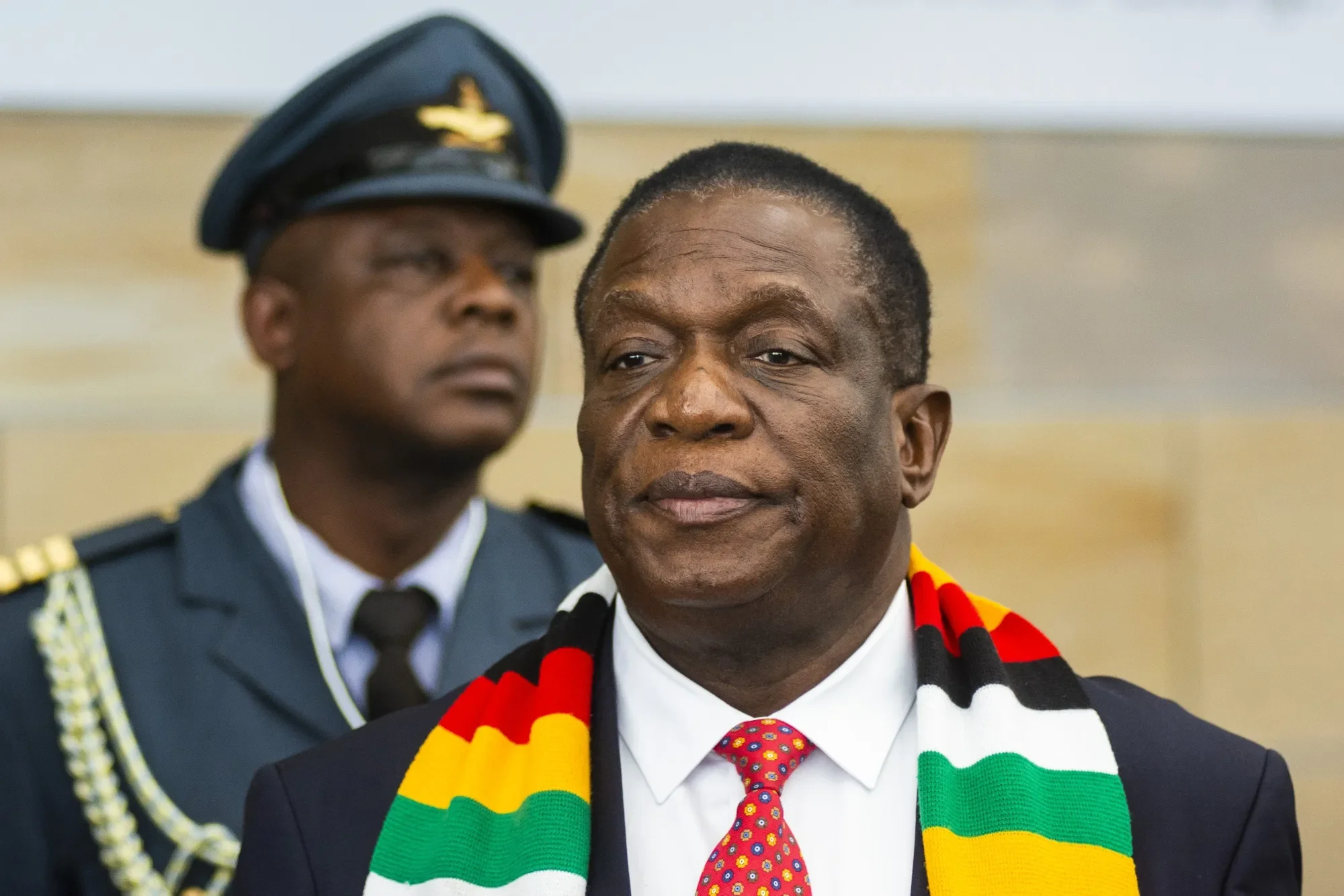
Zimbabwe President Mnangagwa | Source: Bloomberg
What Was on the Table
The proposed agreement, structured as a Memorandum of Understanding under the Trump administration's new "America First Global Health Strategy," would have provided Zimbabwe with $367 million over five years to support HIV/AIDS treatment and prevention, tuberculosis, malaria, maternal and child health, and disease outbreak preparedness. It would have been, according to the U.S. Embassy, the single largest health investment by any foreign partner in Zimbabwe's history, building on nearly $2 billion in U.S. health aid the country has received since 2006.
The stakes could hardly be higher. Zimbabwe has one of the most fragile health systems in the world, where patients routinely supply their own bandages at clinics and must buy their own medicines due to chronic shortfalls. The country is currently rolling out lenacapavir, a breakthrough long-acting HIV prevention drug administered just twice a year, a rollout supported by PEPFAR in partnership with the Global Fund, whose future deliveries are now in serious question.
So why did Zimbabwe say no?
𝐅𝐎𝐑 𝐈𝐌𝐌𝐄𝐃𝐈𝐀𝐓𝐄 𝐑𝐄𝐋𝐄𝐀𝐒𝐄
— U.S. Embassy Harare (@USEmbZim) February 25, 2026
𝐓𝐡𝐞 𝐔𝐧𝐢𝐭𝐞𝐝 𝐒𝐭𝐚𝐭𝐞𝐬 𝐑𝐞𝐠𝐫𝐞𝐭𝐬 𝐆𝐨𝐯𝐞𝐫𝐧𝐦𝐞𝐧𝐭 𝐨𝐟 𝐙𝐢𝐦𝐛𝐚𝐛𝐰𝐞 𝐃𝐞𝐜𝐢𝐬𝐢𝐨𝐧 𝐨𝐧 𝐇𝐞𝐚𝐥𝐭𝐡 𝐀𝐬𝐬𝐢𝐬𝐭𝐚𝐧𝐜𝐞 𝐭𝐨 𝐙𝐢𝐦𝐛𝐚𝐛𝐰𝐞
Harare, Zimbabwe, February 24, 2026 – The Government of Zimbabwe has… pic.twitter.com/LC25AZDXdn
The Sticking Points: Data, Sovereignty, and Reciprocity
The deal collapsed on three interconnected grounds, all rooted in the same fundamental concern: Zimbabwe was being asked to give far more than it would receive.
Data access. The U.S. sought direct access to Zimbabwe's sensitive health data, including biological samples and epidemiological information from Zimbabwean citizens, over an extended period. Harare described this as an intelligence overreach and a provision that "compromised national independence." Zimbabwe's government argued that health data and biological samples are national strategic assets, to be governed by Zimbabwean law, not handed over under the terms of a foreign funding agreement.
No reciprocal benefit. Most critically, Zimbabwe objected to the fact that the U.S. offered no guarantee that any vaccines, treatments, or diagnostics developed using Zimbabwean data would be accessible to Zimbabweans. As Mangwana put it: "Our nation would provide the raw materials for scientific discovery without any assurance that the end products would be accessible to our people should a future health crisis emerge." The U.S. was also not offering reciprocal sharing of its own epidemiological data with Zimbabwe's health authorities.
Bypassing multilateral frameworks. Zimbabwe criticized the entire bilateral model as "a departure from the multilateral frameworks" it believes should govern global health cooperation. Harare argued that pandemic-potential virus data should flow through the WHO system, designed to ensure equitable sharing of resulting innovations, not through bilateral agreements that favor the partner with greater resources to commercialize the results.
President Emmerson Mnangagwa had actually issued the directive to halt negotiations back in December 2025, when a memo from Foreign Affairs Secretary Albert Chimbindi instructed the ministries of Finance and Health to immediately cease discussions. Mnangagwa's words in that memo were stark: Zimbabwe must "discontinue any negotiation with the USA on the clearly lopsided MoU that blatantly compromises and undermines the sovereignty and independence of Zimbabwe as a country."
The Broader Context: America First vs. African Agency
To understand what Zimbabwe is pushing back against, you have to understand what the Trump administration's "America First Global Health Strategy" actually means in practice.
Under this framework, the U.S. has dismantled USAID and significantly restructured PEPFAR, the program credited with helping to change the global trajectory of AIDS, while pursuing bilateral deals that require co-financing from recipient countries and prioritize U.S. access to data and research outputs. Sixteen African countries have signed similar MOUs under this framework, representing over $18 billion in combined commitments, with recipient countries themselves contributing roughly $7.1 billion of that total. In January 2026, the U.S. also withdrew from the World Health Organization, a move that deeply informed Zimbabwe's insistence that data-sharing happen through WHO channels.
Meanwhile, a leaked U.S. State Department memo reported by The Atlantic revealed that seven African countries — including Zimbabwe — would have all U.S. humanitarian aid cancelled because there was "no strong nexus between the humanitarian response and U.S. national interests." The timing of that leak and Zimbabwe's formal rejection of the MOU, just days apart, painted a bleak picture of the direction of U.S.-Africa health relations.
Zimbabwe is not alone in its pushback. Zambia also backed away from the U.S. health MOU framework around the same time. And in Kenya, the High Court suspended implementation of a similar U.S.-backed health agreement signed in December 2025, following legal challenges by the Consumer Federation of Kenya and a senator who raised concerns about data privacy and the bypassing of parliament. A continent-wide reckoning with the terms of global health partnership is underway.
The Human Cost: Who Bears the Risk?
The diplomatic framing of this dispute, sovereignty, data rights, and multilateralism, can obscure the very immediate, very human consequences of what is now unfolding.
Zimbabwe's College of Public Health Physicians urged both governments to return to the table, warning bluntly: "An abrupt discontinuation of such support could risk treatment interruption, increased transmission, the emergence of drug resistance, and additional strain on the health system." Zimbabwe's HIV program, including antiretroviral treatment, laboratory infrastructure, and supply chains, remains heavily reliant on external funding. Between 2018 and 2020, PEPFAR alone covered between 32% and 42% of Zimbabwe's total HIV spending.
1.2 million Zimbabweans are currently receiving HIV treatment through U.S.-supported programs. The rollout of lenacapavir, celebrated in Harare just days before the negotiations collapsed, now faces an uncertain future.
The Zimbabwe Doctors Association called for renewed dialogue, urging both sides to find common ground so that "Zimbabwe's HIV programme and other critical health services are not interrupted." These are not abstract concerns. Drug resistance does not wait for diplomatic resolution.
A Sign of Africa's Geopolitical Maturation?
Zimbabwe's government has been careful to frame its stance not as anti-American hostility, but as a principled stand for equitable partnership. "This growing continental reflection should not be misconstrued as anti-American sentiment," Mangwana wrote. “On the contrary, it is a sign of Africa's maturation as a geopolitical actor, one that seeks partnerships based on equality rather than patronage."
It's a striking phrase, and not an empty one. The question of who owns data generated from African patients, whose bodies serve as the substrate for research that produces treatments, vaccines, and commercial products primarily benefiting wealthy countries, is one of the most consequential unresolved questions in global health. The legal framework governing biological samples and associated data has long been a site of contest. The Nagoya Protocol, adopted in 2010 under the Convention on Biological Diversity, established principles of "access and benefit-sharing" designed precisely to address this asymmetry. Zimbabwe's objections fit squarely within that established framework.
Africa CDC Director-General Dr. Jean Kaseya acknowledged the legitimacy of the concerns, telling journalists, "There are huge concerns regarding data, regarding pathogen sharing. We want to own our data in Africa." He also affirmed Africa CDC's support for both Zambia and Zimbabwe in navigating their situations.
What Happens Now?
Both sides have left the door at least slightly ajar. Zimbabwe's foreign ministry acknowledged that its rejection of this specific MOU does not foreclose other forms of cooperation. The U.S. Embassy, for its part, framed the wind-down as "regrettable" rather than irreversible.
But the immediate reality is a health funding vacuum in one of the world's most vulnerable public health environments. The withdrawal of the U.S., Zimbabwe's largest health donor, leaves a gap that neither the domestic budget nor any alternative donor can plausibly fill in the short term.
What Zimbabwe has demonstrated, at high cost, is that the terms on which rich countries offer health assistance to poor ones are no longer beyond question. The "patron-client" model of global health funding, where funding flows in one direction and data, samples, and deference flow in the other, is meeting increasing resistance from governments that understand their own leverage and the value of what they hold.
Whether that resistance translates into a more equitable global health architecture, or simply into suffering for the patients caught in the middle, depends on whether both sides can find a path back to the table, and whether the U.S. is willing to offer a deal that looks less like extraction and more like partnership.