How Guinea-Bissau Shut Down a Deeply Controversial U.S.-Funded Vaccine Trial
In December 2025, a quiet notice appeared in the U.S. Federal Register: the Centers for Disease Control and Prevention (CDC) had awarded $1.6 million to Danish researchers to conduct a hepatitis B vaccine trial on 14,000 newborn babies in Guinea-Bissau, one of the poorest and most hepatitis B-burdened nations on earth. Within weeks, it had ignited a firestorm of global outrage, drawing condemnation from the World Health Organization, members of the U.S. Congress, and public health experts worldwide. By late January 2026, Guinea-Bissau's own health minister had pulled the plug.
"It's not going to happen, period," Guinea-Bissau's Foreign Minister Joao Bernardo Vieira told Reuters. That blunt declaration ended one of the most ethically fraught episodes in recent global health research. But the story of how the trial was conceived, funded, and ultimately stopped raises uncomfortable questions that won't disappear as easily.
The Trial: What Was Actually Proposed?
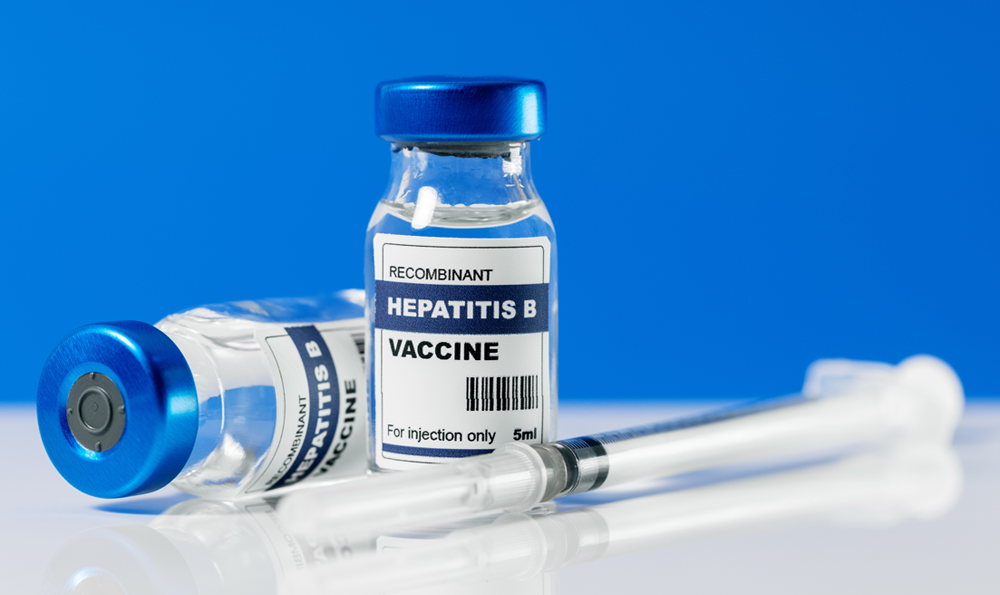
The study, called the HBV0-NSE trial, was to be led by Christine Stabell Benn and Peter Aaby of the Bandim Health Project — a research group affiliated with the University of Southern Denmark that has operated in Guinea-Bissau for decades. The design was, on its face, simple: enroll 14,000 newborns and randomly assign half of them to receive a hepatitis B vaccine dose at birth. The other half would receive the shot at six weeks of age, the current standard in Guinea-Bissau. Researchers would then compare health outcomes over five years.
The stated goal was to investigate "non-specific effects" of the vaccine, meaning impacts beyond its intended protection against hepatitis B, including potential links to skin conditions like atopic dermatitis and neurodevelopmental disorders such as autism by age five.
To many scientists, that framing immediately set off alarm bells.
Why Experts Were Outraged
The World Health Organization recommends that every baby receive a hepatitis B vaccine within 24 hours of birth. This is not a controversial policy suggestion; it is among the most well-established interventions in global pediatric health. Hepatitis B can spread readily from mother to child during delivery, and without early vaccination, up to 90% of exposed newborns will develop chronic infection. Between 15% and 25% of those chronically infected will die prematurely from liver cancer or liver failure.
Guinea-Bissau sits at the epicenter of this crisis. Nearly one in five adults in the country, around 19%, lives with chronic hepatitis B infection. The country currently vaccinates at six weeks of age, not out of scientific preference, but because of resource constraints. Its government had already announced plans to begin universal birth-dose vaccination in 2027–28.
Against this backdrop, the trial's design, deliberately withholding an early birth dose from half of the enrolled babies, struck critics as indefensible. WHO Director-General Tedros Adhanom Ghebreyesus stated flatly: "Of course, a sovereign country can decide whatever they want, but as far as WHO's position is concerned, it's unethical to proceed with this study."
The scientific critique ran equally deep. Critics pointed out that the trial's five-year timeline was woefully inadequate to detect hepatitis B's real harms; liver cirrhosis and cancer can take decades to manifest. As emergency physician Jeremy Faust put it: "Trying to detect a decrease in all-cause mortality at 42 days is doomed to fail. It's like doing a trial of chemotherapy and asking if the patient is alive a week later."
The Bandim Health Project: A Controversial Track Record
The Bandim Health Project is not a new player in global health research, but it has long occupied contested terrain. The group has promoted the hypothesis that some widely-used vaccines have harmful "non-specific effects," meaning they might, in theory, increase susceptibility to unrelated diseases or raise all-cause mortality.
Their most prominent work in this direction was a 2017 observational study suggesting girls in Guinea-Bissau had worse health outcomes after receiving the DTP (diphtheria, tetanus, and pertussis) combination vaccine. The finding attracted considerable attention, including from U.S. HHS Secretary Robert F. Kennedy Jr., who cited it when justifying cuts to global childhood vaccination funding. However, subsequent attempts to replicate the Bandim findings have repeatedly failed to do so.
The statistical rigor of their work has also been subject to formal scrutiny. A January 2026 analysis published in Vaccine by outside biostatisticians found that the Bandim group had "systematically over-interpreted the findings from their randomized trials," meaning conclusions were routinely overstated and not adequately backed by data.
The Political Dimension
The timing of the trial's funding cannot be separated from its politics. The CDC grant was awarded without competition — an unusual, unsolicited, no-bid contract — and came just days after the CDC's Advisory Committee on Immunization Practices controversially reversed a 30-year recommendation for universal hepatitis B vaccination in U.S. newborns.
The Bandim group has long been championed in anti-vaccine circles; RFK Jr.'s anti-vaccine advocacy group praised Peter Aaby in a 2019 article. Critics drew a straight line: the CDC, now under HHS leadership shaped by Kennedy, was funding researchers whose work aligned with the administration's skepticism toward childhood vaccines. Notably, Christine Stabell Benn, herself, served as an adviser to the reconstituted ACIP — the committee that reversed the birth-dose recommendation — a committee RFK Jr. had largely stacked with vaccine skeptics.
Researchers at the University of Washington's Global Health Justice program framed the implications starkly: "This clinical trial will cause preventable death and morbidity in a country with limited infrastructure … and fuel justified medical mistrust. Allowing this trial to proceed would mark a profound failure of global health ethics and a deliberate choice to place African newborns at risk to advance American political agendas."
How the Approval Slipped Through
One of the most troubling aspects of the story is how the trial received ethical approval in Guinea-Bissau in the first place. According to the Bandim researchers, Guinea-Bissau's National Ethics Committee approved the study on November 5, 2025. But that approval came just three days before a military coup overthrew the government on November 8. The incoming health minister, Quinhim Nanthote, had no knowledge of the trial and was never part of any discussions about it.
Seye Abimbola, a health-systems researcher at the University of Sydney, was blunt: "They're trying to use African children to prove a case for reducing vaccines in the US. That's problematic." A former Guinea-Bissau health minister, Magda Robalo, added that the researchers "took advantage of the fact that Guinea-Bissau does not have a very strong research capacity."
Confusion, Conflicting Signals, and a Final Decision
The trial's fate was murky for several weeks. In mid-January 2026, Africa CDC officials indicated the study had been canceled. HHS pushed back immediately, insisting it was proceeding as planned. On January 22, Guinea-Bissau's health minister definitively suspended the trial, stating the country's ethics committee lacked the technical resources to evaluate it properly. Africa CDC Director-General Dr. Jean Kaseya affirmed that the decision belonged to Guinea-Bissau alone: "It's not a foreign country that will come and say this one will take place. It's the sovereignty of the country."
When the WHO issued its formal condemnation of the trial's design in February, the picture became undeniable. The foreign minister made it official: the trial was dead.
What This Episode Reveals
The Guinea-Bissau hepatitis B trial saga is, at its core, a story about power, who gets to make decisions about which bodies bear the risks of medical research, and in whose interests.
The specific contours of this case, a wealthy country's political agenda, a research group with a contested track record, a poor nation with a newly installed government following a coup, and a vulnerable population of newborns, combine to produce something that critics have rightly compared in spirit to the Tuskegee syphilis study. Not because the intent was identical, but because the underlying logic was similar: the ethical standards applied to the research seemed to relax precisely because the participants were poor, Black, and African.
The episode also underscores a broader truth: global health ethics cannot rely solely on the goodwill of funders. It requires robust national regulatory frameworks, independent scientific review, and genuine, informed consent from host communities. Guinea-Bissau, to its credit, ultimately exercised that sovereignty, even if the approval process that nearly let the trial begin showed just how thin that protection can be.
The hepatitis B vaccine remains one of the safest and most effective tools in modern medicine. The 14,000 babies of Guinea-Bissau deserve no less certainty about that than any other children on earth.