A Shot Every Six Months That Prevents HIV. Africa Is First In Line — But Can It Last?
On February 19, 2026, a 27-year-old sex worker named Constance Mukoloka stepped out of a mobile clinic on the outskirts of Harare, Zimbabwe, beaming. She had just received one of the first doses of lenacapavir, a twice-yearly injectable HIV prevention drug, under the country's new national rollout program. "I am safe, I can work with confidence now," she told PBS News reporters. Daily prevention pills, she explained, created friction with clients who saw the bottles and left. "When I took tablets, customers would see a container of pills and leave."
Credit: Make Medicines Affordable
One week later, on February 26, the very same day Zimbabwe and the U.S. were finalizing the collapse of a separate $367 million health funding deal, Kenya officially launched its own lenacapavir program. The Kenyan Ministry of Health's rollout ceremony, presided over by Cabinet Secretary Aden Duale at Riruta Health Centre in Nairobi, marked the country as one of the first in the world to introduce the drug for HIV prevention.
These two events, a Zimbabwean sex worker receiving a revolutionary injection and a Kenyan health minister announcing the same drug was now freely available to anyone who needed it, represent something historic. They also arrive at one of the most precarious moments in global HIV funding in decades.
What Lenacapavir Is, and Why Scientists Called It a Miracle
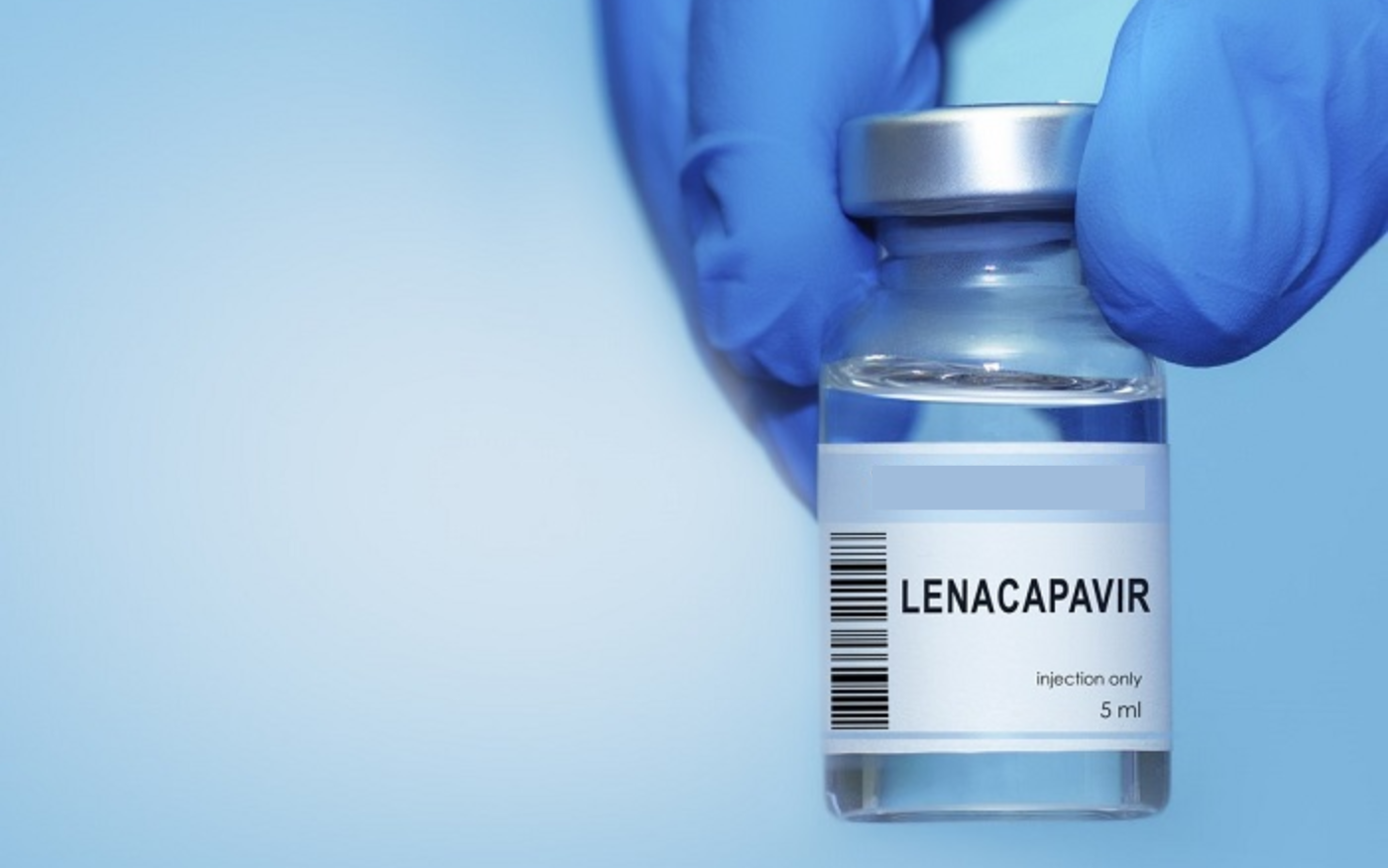
Lenacapavir, developed by California-based Gilead Sciences and sold under the brand name Sunlenca, is a first-in-class capsid inhibitor that targets the protein shell surrounding HIV's genetic material. By binding to the interfaces between the capsid's building blocks, it disrupts the virus at multiple stages of its lifecycle: blocking assembly, preventing proper movement inside cells, and stopping the virus from integrating its genetic material into the host's DNA. Because the capsid structure is highly conserved across HIV strains, the virus has shown minimal ability to develop resistance.
What makes the drug truly transformative for prevention is its duration. A single subcutaneous injection protects for six months. Two injections per year is all it takes.
When the results of the PURPOSE 1 trial were presented at the AIDS 2024 conference in Munich, the scientific audience gave a standing ovation. Among more than 2,000 adolescent girls and young women in South Africa and Uganda, not one who received lenacapavir contracted HIV. The drug showed 100% efficacy in women. In the PURPOSE 2 trial, involving cisgender men, transgender, and non-binary individuals across multiple countries, the reduction in HIV incidence was 96%. Yale School of Public Health Dean Megan Ranney called it "the closest thing to a vaccine that we have." "This medication is beyond the wildest dreams of what many of us could have imagined."
The timing matters enormously. An estimated 1.3 million people were newly infected with HIV in 2024, with women and girls in sub-Saharan Africa accounting for over 60% of new cases. Daily oral PrEP — the previous gold standard for prevention — has been hampered for years by the very barriers Constance Mukoloka described: pill burden, stigma, inconsistent adherence, and the difficulty of discreetly maintaining a daily routine. A twice-yearly injection changes that calculus entirely.
Who Has It, and Who's Getting It
The rollout across Africa has moved at an unprecedented pace, deliberately so. Gilead Sciences, stung by years of criticism over its pricing practices on HIV drugs in wealthy countries, made a commitment to move fast in low-income countries. Initial shipments arrived in Eswatini and Zambia by November 2025, just five months after the U.S. FDA approved the drug for prevention, making those two countries among the first in the world to begin real-world administration. This marked a dramatic contrast with previous HIV drug rollouts, where low-income countries often waited a decade or more after wealthy-country approval.
As of late February 2026, here is where things stand across the continent:
Zimbabwe launched a national program on February 19, 2026, targeting high-risk groups including sex workers, adolescent girls and young women, gay men, and pregnant and breastfeeding women. The injection is offered free of charge at participating clinics, supported by PEPFAR and the Global Fund. Zimbabwe has 1.3 million people living with HIV, a prevalence rate of around 12%, dramatically reduced from 34% in the early 2000s, but new infections remain a persistent concern, particularly among young women.
Kenya officially launched on February 26, receiving an initial consignment of 21,000 starter doses. The rollout follows a three-phase plan: first covering 15 high-burden counties, then 15 more, then the remaining 17. Kenya recorded just over 19,000 new HIV infections in 2024, about 52 every single day, and the government has pledged to reach zero new infections by 2030. The launch was presided over by Health Cabinet Secretary Aden Duale, who confirmed the medicine met all regulatory and procurement requirements assessed by the Pharmacy and Poisons Board with Global Fund support.
South Africa registered the drug in record time in late October 2025 and began integration into public health clinics in early 2026. Wits RHI, the University of the Witwatersrand's reproductive health institute, is simultaneously conducting a Unitaid-funded study integrating lenacapavir into existing services at Department of Health facilities, deploying mobile clinics to schools and community hotspots, and using digital platforms reaching 200,000 people per month to generate demand. Health Minister Aaron Motsoaledi confirmed a first phase rollout beginning in March or April 2026.
Zambia and Eswatini began rollouts in late 2025 as the earliest recipients of doses. Mozambique received regulatory approval in January 2026. Lesotho, Uganda, Nigeria, and several other countries are expected to follow in the coming months. In total, Gilead has filed regulatory submissions for lenacapavir as PrEP in at least 10 sub-Saharan African countries, with the company intending to complete submissions in 18 countries by the end of 2025, covering approximately 70% of the HIV burden in the region.
The Price Problem: A $42,000 Drug for $40 a Year
In the United States, lenacapavir as a treatment costs $42,250 per year. The prevention version is priced similarly at launch for wealthy markets. These numbers are entirely irrelevant to most of sub-Saharan Africa, and the global health community knew a plan was needed from the start.
The breakthrough on pricing came in September 2025, when Unitaid, Wits RHI, and the Clinton Health Access Initiative (CHAI) announced a landmark agreement with Dr. Reddy's Laboratories, the Indian generic pharmaceutical giant, to manufacture generic lenacapavir at $40 per person per year for low- and middle-income countries by 2027. Research suggests that if the generic market reaches scale, lenacapavir could theoretically be produced for less than $40 annually with multiple manufacturers competing.
In the interim, before 2027 and the arrival of generic supply, the originator Gilead product is being provided in Africa at a negotiated access price, with costs covered primarily by PEPFAR and the Global Fund. The two organizations jointly committed in December 2024 to reaching up to 2 million people with lenacapavir for PrEP over 3 years. That commitment remains in place, though its delivery has grown more complicated.
The gap in the voluntary licensing agreement is also worth noting. Gilead's license covers low-income countries, but as UNAIDS Executive Director Winnie Byanyima has pointed out, "they lock out the middle-income countries because they think they can get a higher price there." Countries like Egypt, Morocco, and parts of Latin America, where HIV burdens are real and rising, are excluded from the cheap generic deal.
The Real Challenge: Why "Available" Doesn't Mean "Accessible"
Constance Mukoloka was lucky. She lives near a mobile clinic in Zimbabwe's capital, knew about the rollout, and had the freedom to seek it out. Many of the women who need lenacapavir most urgently have none of those things.
Zimbabwe's health minister Douglas Mombeshora captured the challenge precisely: "Prevention must fit into real life. If a health solution is too complicated, too demanding, or too visible, people simply won't use it." Lenacapavir addresses visibility and daily-adherence issues. But health systems still need to find patients, administer injections correctly, track six-monthly return visits, maintain cold chains, train healthcare workers, and reach populations, sex workers, gay men, and transgender women, who face structural barriers to clinic access in countries where they are criminalized or stigmatized.
The injection itself requires careful technique. During clinical trials, a few participants developed ulcers when nurses injected the drug too superficially. "And that is in the context of a well-conducted clinical trial," noted Dr. Jeanne Marrazzo of the U.S. National Institute of Allergy and Infectious Diseases — meaning the risks of improper injection are likely higher in real-world settings with less training and oversight.
There are also scientific concerns about the "tail" period, when lenacapavir levels gradually decline after each injection. Epidemiologist Salim Abdool Karim has warned that if someone acquires HIV during that low-concentration window, the virus might develop resistance, a serious issue given that lenacapavir represents a novel drug class. Experience with a similar injectable drug, cabotegravir, has already revealed a small number of cases of "occult infection," where patients unknowingly infected near the time of injection develop hard-to-detect, treatment-complicating outcomes.
These are solvable problems, but they require investment, infrastructure, community outreach, and time.
The Shadow Hanging Over Everything: Funding
The scientific case for lenacapavir is overwhelming. The logistical and political case is more complicated and, right now, more fragile than it has been in years.
PEPFAR's current short-term authorization expired on April 30, 2025. A bridge plan has maintained some operations, but the program is operating in a state of deep uncertainty under an administration that has already dismantled USAID and restructured global health priorities around "America First" bilateral deals. A study published in the Annals of Internal Medicine estimated that eliminating PEPFAR entirely would lead to 601,000 HIV-related deaths and 565,000 new HIV infections in South Africa alone over ten years.
A one-year pause in PEPFAR-funded PrEP could result in 6,671 additional new HIV infections, with Tanzania, Nigeria, South Africa, Zambia, and Uganda accounting for 68% of that impact. Five-year effects, through onward transmission, could push the total number of new infections above 10,000. These are not hypotheticals; they are modeled projections based on decades of data on what happens when prevention programs are disrupted.
The Lancet HIV noted bluntly that "the global HIV response is under threat like never before, with drastic funding cuts undermining the gains of the past 25 years." The total global budget for PrEP in 2024 was $250 million, less than one-fifth of the $1.3 billion that UNAIDS estimates is needed for PrEP alone in 2025. Generic lenacapavir at $40 per person per year is, in a sense, almost irrelevant if there is no funded system to procure it, distribute it, and administer it.
Yvette Raphael, co-founder of Advocacy for Prevention of HIV and AIDS in Africa and one of the AAAS Breakthrough of the Year Award recipients for her role in bringing lenacapavir to market, put it plainly: "This is not the last breakthrough for HIV prevention. Without continuous funding for prevention and advocacy, we won't have tomorrow's breakthroughs." She also warned that cuts mean "life-saving drugs will fall out the window."
A New Bar for Speed, Equity, and Political Will
Despite all the caveats, what is happening right now across southern and eastern Africa is genuinely remarkable. For the first time in the history of HIV drug development, a prevention injectable is arriving in Africa the same year it was approved in the United States. Zimbabwe, Kenya, Zambia, and Eswatini are not waiting years or decades for access. They are in the first wave.
That is a direct result of advocacy that began before PURPOSE 1 results were even announced, HIV activists, African scientists, and global health organizations who demanded equitable access timelines as a precondition for the scientific work, not an afterthought. It is a result of Gilead's access agreements, the Global Fund's procurement commitments, and PEPFAR funding that, for now, remains in place.
But speed is not the same as equity. Reaching the millions of women most at risk, not only in capital city clinics, but in rural areas, in criminalized communities, in countries where HIV stigma remains a barrier to clinic attendance, will require sustained political commitment and investment that no injection, no matter how miraculous, can substitute for.
Constance Mukoloka is safe. She knows it, and she is beaming. The question is how many women like her, across Zimbabwe, Kenya, Nigeria, Uganda, Mozambique, and beyond, will have that same chance before the next funding cycle, the next political shift, or the next crisis redraws the map.