Beyond the Lungs: Gender, Anxiety, and the Hidden Burden of Tuberculosis
“There was a girl who was getting married. She was given a 1-month medicine course but the TB complication was not reducing due to anxiety. Her mother told us that she is getting married in a month or two, if her in-laws came to know that she has TB, her marriage will be called off.”
This story is not uncommon. It reveals how tuberculosis is not only a disease of the lungs but also a deeply social and emotional experience. For many women, a diagnosis of TB threatens far more than their health - it can affect their marriage prospects, social standing, and family relationships. Experiences like this remind us that mental health challenges associated with TB are not abstract concerns. They are shaped by social expectations, stigma, and gender roles that affect men and women in very different ways.
Why does TB affect women differently?
Globally, TB notifications are higher among men than women. However, the gendered experience of the disease is far less understood. Much less attention has been paid to how tuberculosis interacts with other conditions - particularly common mental disorders such as anxiety and depression - and how these experiences differ between men and women.
Evidence increasingly shows that mental health problems are common among people living with TB. Depression and anxiety frequently occur alongside the disease and can significantly affect treatment adherence, recovery, and quality of life. Yet these conditions often remain undiagnosed and untreated in TB care programmes.
For women, the burden can be particularly severe. TB often intersects with powerful social pressures, including stigma, expectations around marriage, fertility, and family responsibilities. The fear of social rejection or damaged marriage prospects can intensify psychological distress during diagnosis and treatment.
When these mental health needs remain unaddressed, the consequences can extend beyond emotional suffering. Anxiety and depression can lead to poorer treatment adherence, delayed recovery, reduced quality of life, and, in some cases, treatment failure.
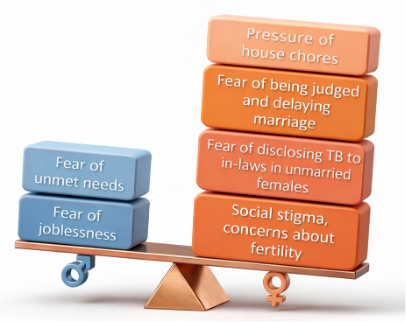
Image Credit: The authors
Why must gender and mental health be part of TB care?
TB programmes have historically focused on biomedical treatments - diagnosing infection, prescribing medicines and ensuring treatment completion. While this strategy has saved millions of lives, it often overlooks two critical dimensions of the disease: the mental health challenges faced by patients and the gendered social realities that shape their experiences of illness and care.
Frontline healthcare workers frequently observe how mental distress can interfere with treatment success.
“The majority of our TB treatment failure cases are those which involved patients who also had anxiety; as a result of which, they took medications for 4 or 5 months but did not improve.”
“Unmarried females and those who are engaged, and their wedding is near, so they face the issue that their in-laws do not know about it. And the married females are afraid that they will have children or not”
Such experiences highlight an important but often neglected reality: treating TB effectively requires addressing both physical and mental health needs, as well as the social contexts in which patients live. Ignoring these dimensions risks undermining the effectiveness of even the most well-designed treatment programmes.
What our research in Pakistan revealed
Qualitative research conducted across TB care centres in Pakistan, including interviews with TB health care providers, patients, and caregivers provides valuable insights into how gender shapes the experience of TB and its associated mental health challenges.
The findings revealed that women often experience higher levels of anxiety throughout the TB care journey, particularly during diagnosis and treatment. These emotional struggles are closely linked to social expectations and TB-related stigma.
Women frequently described fears of social isolation, gossip, and discrimination following their diagnosis. For unmarried women, concerns about marriage prospects were particularly distressing. Many feared that disclosure of a TB diagnosis could lead to cancelled engagements or rejection by prospective in-laws.
Married women faced different concerns. Many worried about their fertility after TB treatment or feared that their illness might affect their relationships within the household. At the same time, they often continued to carry the burden of household responsibilities, childcare, and caregiving while undergoing treatment, which further contributed to stress and anxiety.
Men also experienced psychological distress, but their concerns were often shaped by different social roles. Male patients frequently expressed anxiety about losing employment, financial instability, and the inability to fulfil their role as family breadwinners.
Another important observation was that many female TB patients relied on male family members to attend follow-up visits or collect medications. This dependency highlights structural barriers that can limit women’s autonomy and access to care.
Moving towards gender-responsive TB care
The experiences of TB patients show that the disease cannot be understood or addressed through a purely biomedical lens. Social expectations, stigma, and gender roles shape how people experience TB, cope with treatment, and access care.
For many women, the burden of TB extends beyond illness itself to concerns about marriage, family responsibilities, and social acceptance. Men, meanwhile, often face anxieties linked to employment and financial stability. These gendered realities influence mental well-being and, ultimately, treatment outcomes.
Recognising these differences is essential for building TB programmes that truly respond to patients’ needs. Integrating mental health support into TB services and adopting more person-centred approaches can help address the often invisible psychological burden of the disease.
Tuberculosis may be treated with medicines, but improving outcomes requires recognising and addressing the social and gendered dimensions of the illness.